
Lloyd’s Woodworking · Hudson, Massachusetts
By Lloyd’s Woodworking Inc. · Published
7 Signs Your Furniture May Be Worth Saving
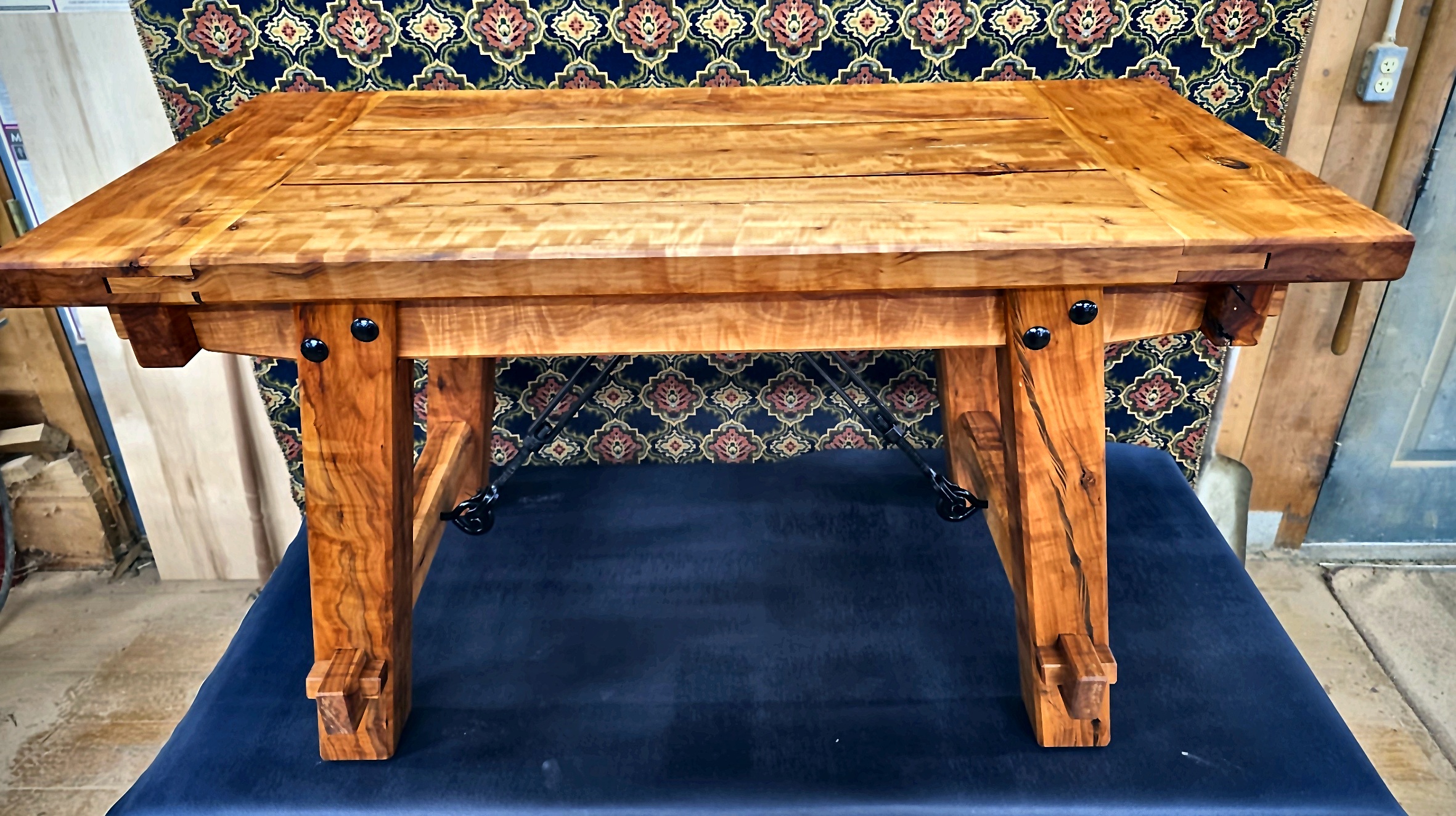
DIRECT ANSWER:
Furniture may be worth saving when it is well constructed, uses quality materials, remains structurally repairable, fits your space particularly well, would be expensive to replace with comparable quality, has historical interest or carries meaningful family history.
BEFORE YOU PUT IT ON THE CURB, LOOK AGAIN.
A terrible finish does not necessarily mean terrible furniture.
A loose joint does not necessarily mean the piece is finished.
And old does not necessarily mean obsolete.
Here are seven reasons to stop before replacing it.
SIGN #1: IT HAS ALREADY SURVIVED FOR DECADES
Longevity doesn't automatically prove quality.
But it tells you something.
If a table has served a family for 50, 75 or 100 years, survived moves, children, holidays and everyday life, there may be worthwhile construction underneath the worn finish.
Look beyond appearance.
SIGN #2: THE CONSTRUCTION IS SUBSTANTIAL
Look at:
Joinery
Drawer construction
Thickness of components
Hardware
Interior construction
Underside
Back
Structural members
Furniture designed to be repairable can sometimes have a much longer useful life than furniture designed primarily for low manufacturing cost.
SIGN #3: THE DAMAGE LOOKS WORSE THAN THE STRUCTURE
Scratches are visible.
A worn finish is visible.
Water rings are visible.
Faded color is visible.
Those conditions can make furniture look terrible while the basic structure remains sound.
Cosmetic deterioration and structural failure are not the same thing.
SIGN #4: REPLACING THE SAME QUALITY WOULD BE EXPENSIVE
Don't compare an older quality dining table with the cheapest new dining table you can find.
Compare:
Materials
Construction
Size
Design
Repairability
Durability
Craftsmanship
A $500 replacement is only comparable if it actually provides what you're replacing.
SIGN #5: IT FITS YOUR SPACE PERFECTLY
Older homes often contain unusual dimensions.
Your existing:
Cabinet
Table
Desk
Bookcase
Built-in
may fit because it was selected or created specifically for the room.
Measure before discarding.
You may discover the replacement problem only after the original is gone.
SIGN #6: IT HAS ARCHITECTURAL OR HISTORICAL CONNECTION
Some furniture and woodwork belongs visually to the building around it.
This is particularly important with:
Built-ins
Doors
Cabinetry
Paneling
Church furnishings
Architectural millwork
Historic interiors
Replacing an original component can affect more than the component itself.
SIGN #7: YOU WOULD BE UPSET IF IT DISAPPEARED
This may be the strongest sign of all.
Imagine someone hauled the piece away this morning.
Would you feel relieved?
Or would your immediate reaction be:
"Wait. I wasn't ready to lose that."
That answer matters.
BONUS SIGN: EVERYONE IN THE FAMILY KNOWS ITS STORY
"The Thanksgiving table."
"Grandpa's chair."
"The cabinet from the old house."
"The desk Dad worked at."
When furniture acquires a name or story within a family, it has already become something more than a household object.
WHAT DOESN'T AUTOMATICALLY MAKE FURNITURE WORTH RESTORING?
Age alone.
Being solid wood.
Being heavy.
Being inherited.
Being labeled "antique."
Looking expensive.
Every project still needs individual evaluation.
WHEN REPLACEMENT MAY MAKE MORE SENSE
Replacement may be appropriate when:
Construction is poor.
Damage is extensive.
Important material is missing.
Restoration cost is unreasonable for your needs.
You dislike the furniture.
It no longer serves a purpose.
A suitable replacement is readily available.
There is no sentimental or historical reason to preserve it.
Restoration is an option, not a moral obligation.
THE 60-SECOND TEST
Before replacing furniture, ask:
Is it well made?
Is it repairable?
Do I like it?
Does it fit?
What would comparable quality cost?
Does it have a story?
Would I regret losing it?
If you keep answering yes, take photographs before making the final decision.
ONE EASY NEXT STEP.
SHOW US WHAT YOU HAVE.
============================================================
USE THE SIGNS AS QUESTIONS, NOT A SCORECARD
The seven signs are prompts for a closer look, not a formula that can certify a piece as worth restoring. A well-built table may still have damage that is difficult to address, while a modest cabinet may be useful and personally important even if it has no unusual construction. No single clue, including weight, age, solid wood or a family story, determines the right choice. Consider how several factors work together and what you want from the furniture.
Start with the piece’s practical condition. Does it serve its purpose? Are joints stable? Are panels, drawers or doors functioning? Is damage limited to a finish, or does it affect the frame? Take photographs of the whole item and of the areas that concern you. If it is safe, note labels, hardware, joinery, the underside and any previous repairs. Avoid dismantling the piece simply to inspect it; a professional can identify what additional views or measurements would help.
COMPARE LIKE WITH LIKE WHEN CONSIDERING REPLACEMENT
A replacement is only a meaningful comparison if it offers similar function, dimensions, materials and construction. An inexpensive new item may not fit a narrow opening, coordinate with existing chairs or provide the storage and strength the household needs. A custom replacement may solve those problems but involve a different design and fabrication scope. Write down what the current piece does well and what needs to change before comparing alternatives.
Include practical issues such as delivery access, room layout, maintenance, storage, seating and whether the piece must work with other furniture. If a piece was made for a nonstandard opening or belongs to a built-in arrangement, measure the space before removing it. A replacement can be a reasonable decision, but it should address the actual need. A restoration estimate and a realistic replacement option answer different questions; neither should be compared with an imagined price or a promise about future value.
SEPARATE PERSONAL MEANING FROM MARKET VALUE
Family importance is real even when it cannot be translated into a resale figure. Write down what relatives know about the furniture and keep photographs or records that give the story context. Distinguish family recollections from documented information about a maker, date or origin. If collectible value could change the decision, consult a qualified appraiser before sanding, stripping, repainting or replacing original parts. A woodworking discussion is not an appraisal, and restoration should not be treated as a guaranteed investment.
It is also acceptable to decide that keeping a piece is not right for the household. A difficult-to-use table, a poor fit or extensive damage may outweigh the reasons to preserve it. The goal of an evaluation is to understand practical options and trade-offs, not to make owners feel obligated to restore every inherited object. If the piece can be repaired, the next discussion can focus on the work and its limits; if not, the family can make a replacement decision with better information.
CHOOSE A NEXT STEP THAT MATCHES THE QUESTION
If the concern is structural safety, stop using the furniture until it is assessed. If the question is collectible value, seek an appraisal. If the primary issue is finish appearance, describe the coating and any treatments already tried. If the piece does not fit, measure the room and the furniture before choosing between modification and replacement. These paths can overlap, but naming the main question helps prevent a surface repair from being mistaken for an answer to a structural or valuation concern.
A first inquiry can include the piece type, approximate size, location, photographs, known history and the outcome you hope to achieve. Ask what can be determined from those materials and what would require an inspection. This keeps the decision specific to the furniture instead of relying on broad rules such as “old is always better” or “damaged means finished.”
LET THE OWNER’S PRIORITIES GUIDE THE SCOPE
A useful evaluation does not need to end in a commitment to restore. It should help identify practical choices: repair the structure, improve the surface, preserve an original feature, adapt the piece for another use, replace it or leave it unchanged. The owner can weigh these options against the room, the furniture’s condition, the intended use and any personal or historical importance. Sometimes the most useful result is learning what would be involved before deciding whether to proceed.
If a piece is a possible antique, avoid irreversible cleaning or refinishing until its value and history have been considered. If it is a built-in or architectural component, include the surrounding room in the evaluation. If it is ordinary furniture with no special attachment, replacing it may be sensible. No general list can decide for every owner. The strongest decision is the one based on the actual piece and the outcome that matters to the people who use or preserve it.
BEFORE YOU REPLACE IT, LET US SEE IT.
CAN THIS BE SAVED?Not ready to contact us yet?
Keep learning.
Is my furniture worth restoring?
Go deeper on the factors behind the decision.
Read articleWhat does furniture restoration cost?
Understand scope before comparing options.
Read articleWhen a wood repair stops being a DIY project
Know when structure or original material needs care.
Read article
Still not sure?
Send Lloyd’s a few photographs.