
Lloyd’s Woodworking · Hudson, Massachusetts
By Lloyd’s Woodworking Inc. · Published
Should I Save the Original Woodwork in My Old House?
DIRECT ANSWER:
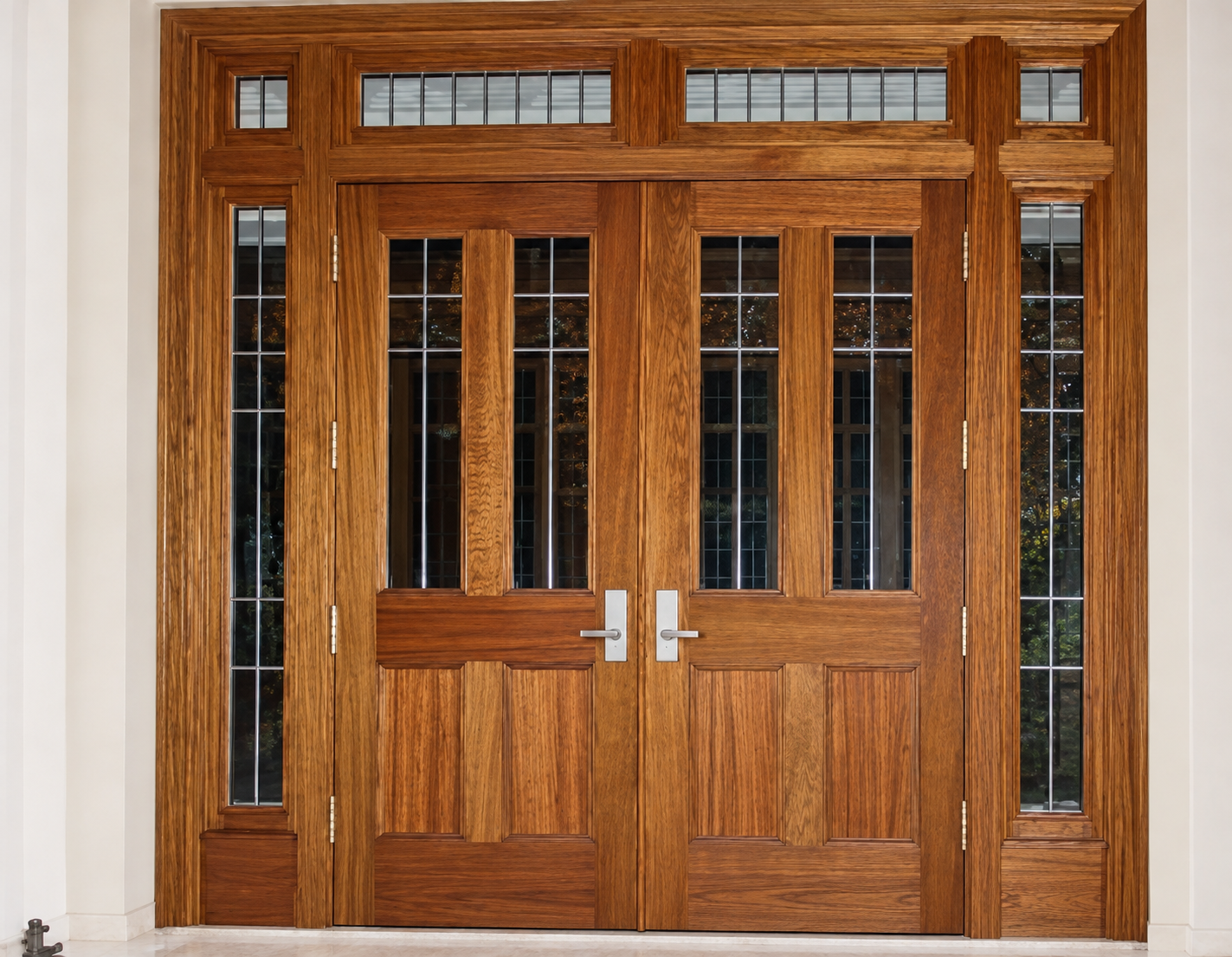
Original woodwork may be worth preserving when it remains structurally sound, contributes to the architecture of the house, would be difficult or expensive to reproduce, or represents craftsmanship and materials that are part of the building's character. Evaluate it before demolition because removal is much easier than authentic replacement.
BEFORE THE CROWBAR COMES OUT, TAKE ANOTHER LOOK.
That old door.
The wide baseboard.
The built-in cabinet.
The staircase paneling.
The molding around the windows.
It may look worn.
It may have ten coats of paint.
It may need repair.
But once original architectural woodwork is removed, replacing what made the house distinctive can become much harder than expected.
OLD DOESN'T AUTOMATICALLY MEAN HISTORICALLY IMPORTANT
Not every piece of wood in an old house deserves preservation.
Homes change.
Previous owners remodel.
Components get replaced.
Some materials are significant.
Others are ordinary later additions.
The objective is not to freeze every house in time.
It is to recognize worthwhile original material before making an irreversible decision.
LOOK AT THE HOUSE AS A WHOLE
Architectural woodwork usually belongs to a system.
A door relates to its casing.
The casing relates to the baseboard.
The baseboard relates to paneling.
Window trim relates to other windows.
Built-ins may align with room proportions.
Removing one element can affect the visual logic of the entire room.
WHAT ORIGINAL WOODWORK MAY BE WORTH EVALUATING?
Examples include:
Interior doors
Exterior doors
Window trim
Door casing
Baseboards
Crown molding
Paneling
Wainscoting
Built-in cabinetry
Bookcases
Mantel components
Stair components
Decorative brackets
Newel posts
Church-like architectural details in larger homes
Custom cabinetry
Specialty moldings
Unusual profiles
WHY CAN OLD MOLDING BE HARD TO REPLACE?
Walk into a modern home center and you may find hundreds of molding choices.
That doesn't mean you'll find yours.
Older profiles may differ in:
Width
Depth
Curvature
Proportion
Combination of shapes
Relationship to adjacent trim
A replacement that is "close" may become surprisingly obvious once installed next to the original.
WHAT IF THE WOODWORK HAS BEEN PAINTED?
Paint does not automatically eliminate the significance of old woodwork.
Some architectural woodwork was intended to be painted.
Other woodwork may have been painted during a later renovation.
Determining the appropriate treatment requires understanding the material, condition, coatings and desired result.
Do not assume stripping everything to bare wood is automatically historically correct.
WHAT IF IT IS DAMAGED?
Damage and disposability are not the same thing.
Possible problems include:
Cracks
Missing molding
Loose components
Water staining
Paint buildup
Broken doors
Damaged panels
Previous alterations
Holes from old hardware
Localized deterioration
Some conditions can be repaired.
Others may require partial replacement or replication.
WHAT IF PART OF THE ORIGINAL WOODWORK IS MISSING?
Existing material can provide a pattern.
A surviving molding section may help reproduce missing lengths.
An original door can help establish:
Panel proportions
Thickness
Profile
Hardware location
Construction details
Photographs, drawings and neighboring rooms can provide additional clues.
RENOVATION IS THE MOMENT TO ASK
Do not wait until demolition day.
Before work begins, identify:
What is original?
What is significant?
What can remain?
What needs repair?
What must be temporarily removed?
What needs replication?
What is genuinely beyond practical preservation?
That conversation is much easier before material is damaged or discarded.
TELL YOUR CONTRACTOR WHAT YOU WANT PRESERVED
Do not assume everyone on a project knows which woodwork matters to you.
Mark components.
Photograph them.
Discuss them.
Include preservation requirements in the scope.
If something must be removed temporarily, establish how it will be labeled, protected and stored.
SAVE ORIGINAL PIECES
If molding, hardware or architectural components are removed:
Label them.
Store them safely.
Keep related hardware together.
Record where they came from.
Take photographs before removal.
An unlabeled pile of trim becomes much harder to reinstall correctly.
WHAT IF YOU WANT A MODERN INTERIOR?
Preservation does not require turning your house into a museum.
Original woodwork can coexist with:
Modern kitchens
Contemporary furnishings
Updated lighting
New technology
Modern paint colors
New mechanical systems
Sometimes retaining a few important architectural elements is exactly what prevents a renovated old house from becoming visually generic.
BEFORE YOU REMOVE IT
Ask:
Is it original?
Is it well made?
Is it structurally repairable?
Does it appear elsewhere in the house?
Would matching replacement require custom work?
Does it contribute to the character of the room?
Will I regret losing it?
If you are unsure, take photographs before demolition.
Frequently asked questions
SHOULD ALL ORIGINAL WOODWORK BE SAVED?
No. Condition, significance, functionality and renovation goals all matter.
CAN OLD MOLDING BE REPRODUCED?
Often, depending on the surviving profile and project requirements.
SHOULD PAINTED WOODWORK BE STRIPPED?
Not automatically. Painted surfaces may be original or historically appropriate, and stripping can damage material.
CAN DAMAGED ORIGINAL TRIM BE REPAIRED?
Some damage can be repaired while more severe loss may require replication or partial replacement.
WHEN SHOULD I CONTACT A WOODWORKER DURING A RENOVATION?
Ideally before demolition so preservation and replication options remain available.
BEFORE YOU REMOVE IT, LET US SEE IT.
Original doors, trim, molding, built-ins and architectural woodwork may be difficult to replace once they are gone. Send Lloyd's photos before making an irreversible decision.
PREFER TO TALK? Call Lloyd's Woodworking 978-562-9007