
Lloyd’s Woodworking · Hudson, Massachusetts
By Lloyd’s Woodworking Inc. · Published
Why Does My Old New England House Have Woodwork I Can't Buy Today?
DIRECT ANSWER:
Older New England homes can contain molding profiles, dimensions, wood species, construction methods and custom architectural details that differ from modern stock products. When only part of the original work is missing, custom millwork can sometimes reproduce compatible components instead of replacing everything.
YOU AREN'T IMAGINING IT.
THE NEW TRIM REALLY DOES LOOK DIFFERENT.
Older houses were built in different eras, with different materials, different manufacturing systems and different architectural expectations.
Trying to repair them exclusively with today's standard products can create awkward results.
BUILDING PRODUCTS HAVE CHANGED
Modern construction benefits enormously from standardized products.
Standardization makes building:
Faster
More predictable
More economical
But a house built generations ago was not necessarily assembled from today's standardized catalog.
That is why replacement can become difficult.
OLDER MOLDING PROFILES CAN BE DIFFERENT
Even when modern molding has the same general name, its:
Width
Depth
Curve
Projection
Proportion
may differ from the original.
Place the two pieces side by side and the mismatch becomes obvious.
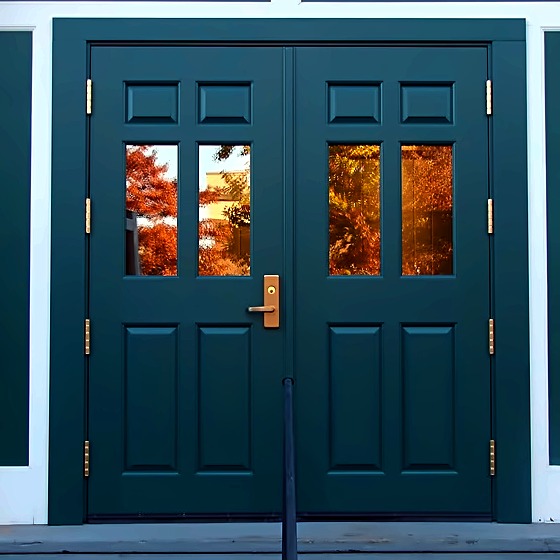
OLD DOORS MAY NOT BE STANDARD SIZE
Older openings can vary.
Replacing a door may therefore involve more than buying a standard slab.
Consider:
Opening dimensions
Thickness
Hinge placement
Panel layout
Hardware
Casing
Threshold
Surrounding architecture
WOOD ITSELF CHANGES OVER TIME
Old wood can differ visually from new material because of:
Age
Light exposure
Oxidation
Finish
Use
Grain
Species variation
A perfect color match should not be promised simply because the same species is selected.
SOME ARCHITECTURAL DETAILS WERE ASSEMBLED FROM MULTIPLE PIECES
What appears to be one complicated molding may actually be several simpler profiles combined.
Understanding how the original assembly was created can help reproduce the overall appearance.
BUILT-INS WERE BUILT IN
It sounds obvious.
But it matters.
An original cabinet may accommodate:
An uneven wall
A sloped floor
An unusual corner
A chimney
A window
A specific ceiling height
Modern freestanding furniture may never fit the same way because the old piece was designed around the building.
OLD BUILDINGS AREN'T PERFECTLY SQUARE
And they don't need to be.
Custom work can account for field conditions rather than forcing standardized components into irregular spaces.
WHY NOT JUST REPLACE EVERYTHING SO IT MATCHES?
Sometimes that is appropriate.
But if 90 percent of the original woodwork remains, replacing all of it because 10 percent is missing can sacrifice a large amount of serviceable historic material.
Replication can sometimes solve the missing 10 percent instead.
CUSTOM MILLWORK FILLS THE GAP BETWEEN OLD AND NEW
Custom woodworking becomes particularly useful when:
Stock trim doesn't match.
A door opening is unusual.
A built-in must fit a specific room.
Historic material is missing.
A renovation requires new work to coexist with old work.
The objective isn't to make everything old.
It is to make new work belong.
SHOW US THE ORIGINAL.
============================================================
BEFORE YOU REMOVE IT, LET US SEE IT.
Original doors, trim, molding, built-ins and architectural woodwork may be difficult to replace once they are gone. Send Lloyd's photos before making an irreversible decision.
PREFER TO TALK? Call Lloyd's Woodworking 978-562-9007