
Lloyd’s Woodworking · Hudson, Massachusetts
By Lloyd’s Woodworking Inc. · Published
Can 100-Year-Old Molding Be Matched?
DIRECT ANSWER:
Often, yes. When original molding survives, its profile, dimensions and relationship to surrounding trim can provide the information needed to reproduce missing material. Exact feasibility depends on the profile, wood, quantity, condition and project requirements.
"CLOSE ENOUGH" DOESN'T ALWAYS LOOK CLOSE ENOUGH.
You found trim at the lumberyard.
It looks similar.
Then you hold it beside the original molding.
The proportions are wrong.
The curves are different.
The depth doesn't line up.
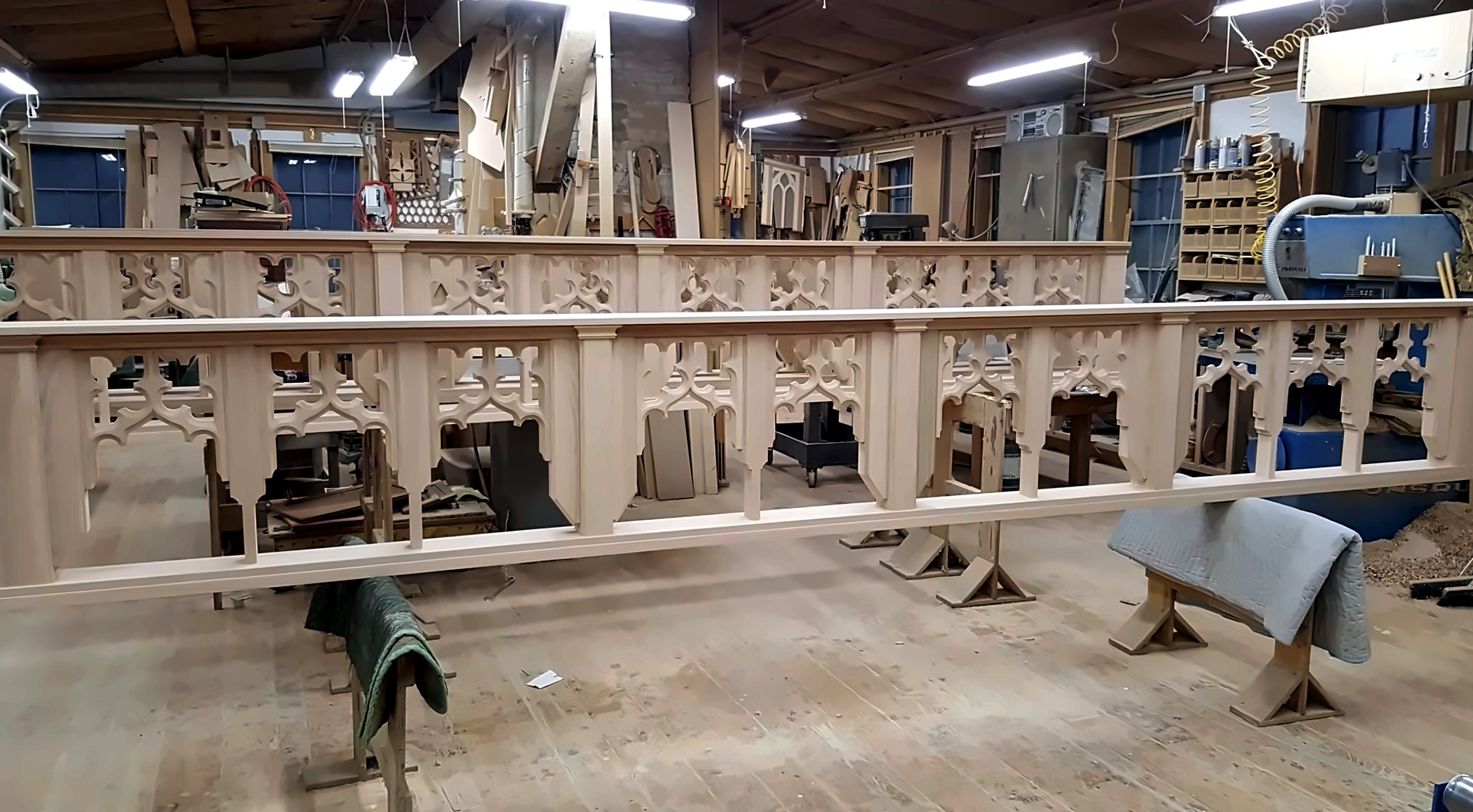
This is one reason custom architectural millwork exists.
WHY CAN'T I FIND MY MOLDING AT THE STORE?
Because your house was not designed around today's inventory.
Older buildings may contain:
Profiles no longer commonly stocked
Regional styles
Site-specific combinations
Custom work
Multiple pieces assembled into one larger profile
Dimensions that no longer match modern standards
THE PROFILE IS THE KEY
Look at molding from the end.
That shape is the profile.
It may contain:
Beads
Coves
Ogees
Fillets
Rounds
Steps
Other transitions
Even small differences can become visible when old and new material meet.
CAN YOU COPY AN EXISTING PIECE?
A surviving section can be extremely useful.
It may establish:
Overall width
Thickness
Profile geometry
Wood species clues
How the molding interfaces with other components
Do not discard damaged original molding simply because it cannot be reused.
It may still serve as valuable reference material.
WHAT IF I ONLY HAVE A SHORT PIECE LEFT?
That may still help.
Protect it.
Label where it came from.
Do not sand away the profile.
Do not cut it smaller simply to make storage easier.
WHAT IF NO ORIGINAL MOLDING REMAINS?
The project becomes more investigative.
Potential references include:
Matching rooms
Neighboring openings
Closets
Hidden areas
Historic photographs
Architectural drawings
Similar components elsewhere in the building
Evidence beneath later renovations
There may still be enough information to create an appropriate replacement.
DOES THE WOOD SPECIES MATTER?
Potentially.
If the molding will be stained or naturally finished, grain and wood characteristics may be visually important.
For painted work, other considerations may have greater importance.
The correct choice depends on the project.
WHAT ABOUT COLOR MATCHING?
New wood and century-old wood may not look identical even when they are the same species.
Age, sunlight, oxidation, finish and previous maintenance all affect appearance.
Matching is therefore more complicated than choosing a stain name from a chart.
DOES EVERY PIECE NEED TO BE PERFECTLY IDENTICAL?
That depends on the project.
A historic preservation project may have different standards from a small repair in a private home.
The goal should be established before fabrication begins.
WHERE CUSTOM MOLDING CAN MATTER
Missing door casing
Window trim
Baseboard sections
Panel molding
Wainscot components
Built-in cabinetry
Fireplace surrounds
Church interiors
Historic commercial spaces
Stair components
Decorative architectural details
BEFORE YOU REMOVE EXISTING MOLDING
Photograph it.
Measure it.
Label it.
Save representative sections.
Record exactly where each section came from.
Protect fragile profiles.
Your demolition debris may contain the template for the replacement.
THAT DOESN'T MEAN IT CAN'T BE MADE.
============================================================
BEFORE YOU REMOVE IT, LET US SEE IT.
Original doors, trim, molding, built-ins and architectural woodwork may be difficult to replace once they are gone. Send Lloyd's photos before making an irreversible decision.
PREFER TO TALK? Call Lloyd's Woodworking 978-562-9007